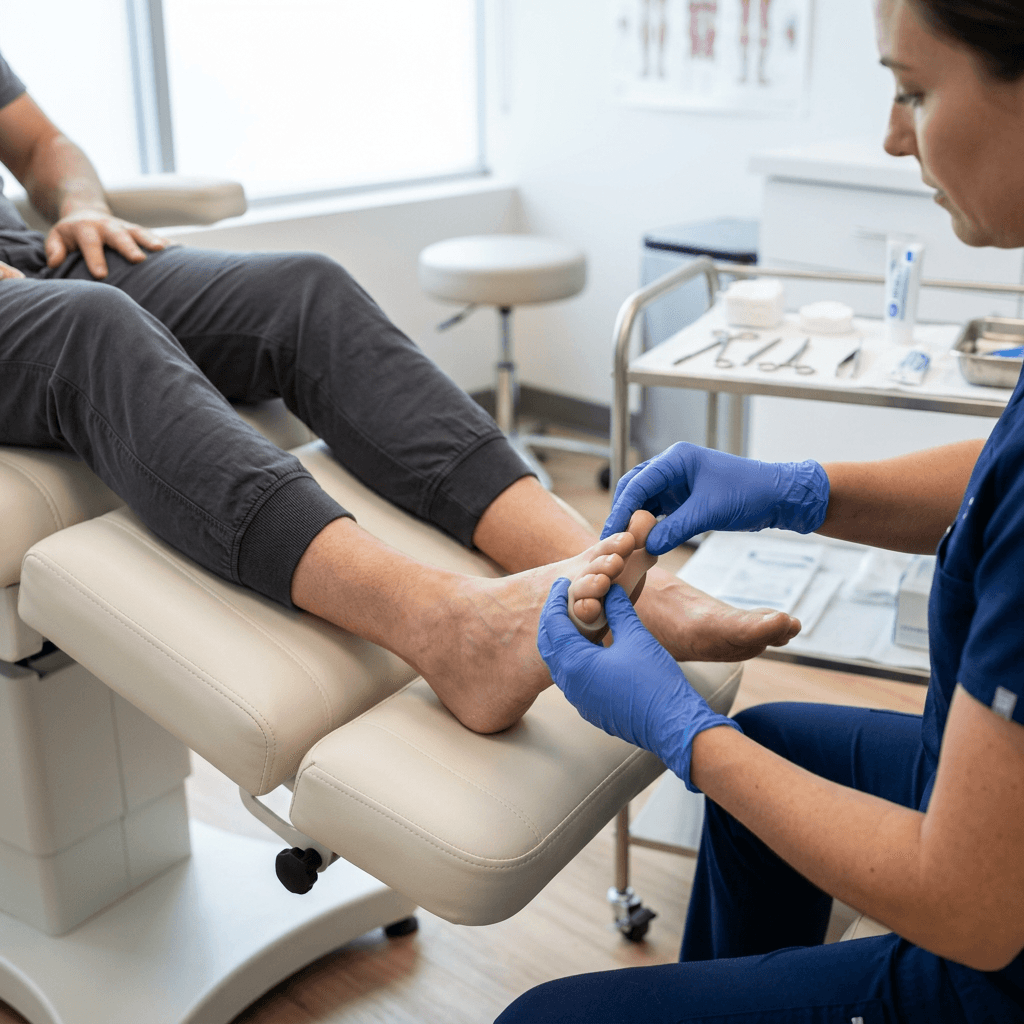
Claw Toe: Causes, Symptoms, and Treatment Options
Learn what causes claw toe, common symptoms to watch for, and treatment options including footwear changes, padding, orthotics, splinting, and surgery.

Learn what causes claw toe, common symptoms to watch for, and treatment options including footwear changes, padding, orthotics, splinting, and surgery.
If one or more toes begin to curl downward and become difficult to straighten, you may be dealing with a condition called claw toe. Claw toe is a foot deformity in which the toe joints bend into a claw-like position. It can lead to pain, pressure points, corns, calluses, trouble wearing shoes, and—especially for people with reduced sensation in their feet—skin breakdown or sores.
Claw toe can affect one toe or several toes. It most often affects the smaller toes, but it may occur alongside other foot conditions or structural changes. Early care matters because flexible toes may respond well to conservative treatment, while untreated claw toes can become more rigid over time.
At Oregon Coast Wound Center, patients in North Bend, Bandon, Coos Bay, and surrounding Oregon Coast communities can receive evaluation and treatment for painful toe deformities, foot pressure problems, and related wound-care concerns.
Claw toe occurs when the joint where the toe meets the foot bends upward while the smaller joints in the toe bend downward. The result is a toe that appears curled or claw-shaped rather than resting flat.
The deformity can begin as a flexible toe that can still be straightened by hand. As the muscles and tendons tighten over time, the toe may become fixed in its bent position. When that happens, pressure from shoes can irritate the tops or tips of the toes and may contribute to painful corns, calluses, blisters, or skin ulcers.
Claw toe is commonly related to an imbalance between the muscles and tendons that control the toes. When certain muscles become weak or other tendons pull too strongly, the toe joints can gradually move into an abnormal position.
Possible contributing factors include:
Nerve damage or neuropathy. Diabetes, alcohol-related nerve damage, stroke, and other neurological conditions can weaken foot muscles or change how they function.
Foot shape and structural issues. High arches, bunions, and other foot alignment concerns may place added stress on the smaller toes.
Poorly fitting footwear. Shoes that are too short, narrow, or tight in the toe box can worsen pressure and contribute to toe deformities over time. High heels may also place the toes in an unfavorable position.
Arthritis or inflammation. Rheumatoid arthritis and osteoarthritis can affect toe joints and contribute to deformity.
Trauma or prior surgery. Foot injuries, ankle fractures, and certain surgical changes can affect tendons, muscles, or joint alignment.
Family history. Some people may be more likely to develop toe deformities because of inherited foot structure.
Claw toe is more than a cosmetic concern. As the toe position changes, pressure can build in areas that are not designed to handle it.
Symptoms may include:
Toes that curl downward or are difficult to straighten.
Pain or irritation on the tops, tips, or bottoms of the toes.
Corns, calluses, or blisters caused by rubbing against shoes.
Redness, swelling, or tenderness around toe joints.
Pain under the ball of the foot.
Difficulty finding shoes that fit comfortably.
Open sores or ulcers, particularly when pressure combines with diabetes or poor sensation.
People with diabetes should pay especially close attention to toe pressure points, calluses, blisters, and skin changes. Reduced sensation can make a small problem easy to miss until it becomes more serious.
Many patients can manage claw toe symptoms without surgery, especially when the affected toes are still flexible. The goal of conservative treatment is to reduce pressure, improve comfort, protect the skin, and slow progression of the deformity.
Treatment may include:
Roomy shoes with a wide, deep toe box. Shoes with adequate space can reduce rubbing and pressure on bent toes.
Low-heeled, supportive footwear. Avoiding high heels and narrow shoes can help keep pressure off the front of the foot.
Padding or gel sleeves. Pads can protect areas where corns, calluses, or shoe friction develop.
Orthotics or shoe inserts. Custom or prefabricated inserts may help redistribute pressure and support the foot.
Toe splints or taping. These may help position flexible toes more comfortably.
Gentle stretching and toe exercises. Stretching the toes and doing exercises such as towel curls or picking up small objects may help maintain flexibility.
Regular foot care. A podiatrist can safely treat painful calluses and monitor areas at risk for skin breakdown.
Do not try to cut corns or calluses yourself, particularly if you have diabetes, circulation concerns, neuropathy, or a history of foot wounds. Professional foot care can help protect the skin and reduce the risk of injury.
Surgery may be considered if claw toe becomes rigid, continues to cause pain, creates recurring corns or wounds, or does not improve with footwear changes and other conservative measures. The appropriate procedure depends on which joints are involved, whether the toe is flexible or fixed, and whether other structural foot issues need to be addressed.medlineplus+2
Surgical treatment may be used to realign the toe, release or rebalance tight tendons, or address joint deformity. A foot and ankle surgeon can explain the available options, expected recovery, and whether surgery makes sense for your symptoms and goals.
Schedule an evaluation if you notice a toe becoming increasingly bent, if pain is affecting your daily activities, or if you develop a corn, callus, blister, or sore that does not improve. Prompt care is especially important for patients with diabetes, neuropathy, circulation issues, or a history of foot ulcers.
At Oregon Coast Wound Center, Dr. Ahmad Namous and the OCWC team provide podiatric care, foot and ankle treatment, and advanced wound-care support for patients throughout North Bend, Bandon, Coos Bay, and the Oregon Coast.
If curled toes, painful calluses, or shoe discomfort are making it harder to walk comfortably, help is available.
Call (541) 329-2555 or visit oregoncoastwoundcenter.com to schedule a foot and ankle evaluation.