Big Toe Arthritis (Hallux Rigidus): When Is Surgery Worth Considering?
Learn about hallux rigidus, also called big toe arthritis, including common symptoms, nonsurgical treatment options, and when a big toe joint fusion may be considered.
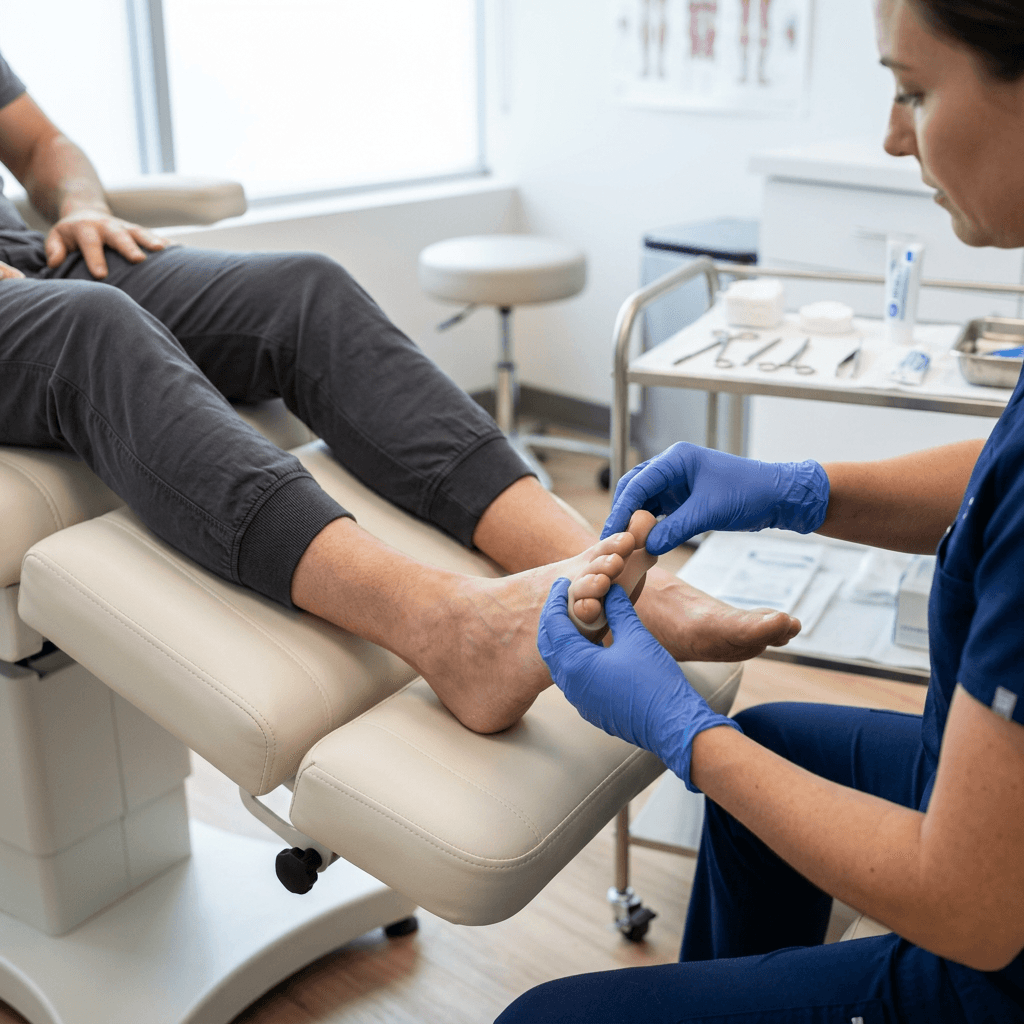
Learn about hallux rigidus, also called big toe arthritis, including common symptoms, nonsurgical treatment options, and when a big toe joint fusion may be considered.
Big Toe Arthritis (Hallux Rigidus): When Is Surgery Worth Considering?
Pain and stiffness in the big toe can make everyday movements surprisingly difficult. Walking, pushing off the ground, climbing stairs, and wearing certain shoes can all become uncomfortable when the joint at the base of the big toe develops arthritis.
This condition is called hallux rigidus. It affects the first metatarsophalangeal joint, often shortened to the first MTP joint, where the big toe meets the foot. As cartilage in the joint wears down, movement can become limited and painful. Bone spurs may also develop around the joint, causing irritation, swelling, and difficulty fitting into shoes.
At Oregon Coast Wound Center, patients in North Bend, Bandon, and surrounding Oregon Coast communities can receive evaluation and treatment for painful foot and ankle conditions, including big toe arthritis.
Hallux rigidus often begins gradually. Some people first notice stiffness when bending the big toe upward, especially while walking or running. As arthritis progresses, pain may become more persistent and begin to interfere with normal activities.
Common signs can include:
Pain at the base of the big toe, especially during walking or push-off.
Stiffness or reduced motion in the big toe joint.
Swelling or tenderness around the joint.
A bump on the top of the joint caused by a bone spur.
Difficulty wearing narrow shoes or shoes that place pressure on the top of the toe.
Changes in walking to avoid pain.
Because the big toe plays an important role in balance and forward motion, pain in this joint can affect the way a person walks and may place added stress on other areas of the foot, ankle, knee, hip, or back.
Not every patient with hallux rigidus needs surgery. Treatment often begins with conservative options intended to reduce pain, inflammation, and motion at the painful joint.
Depending on the condition and the patient’s needs, nonsurgical care may include:
Shoes with a wider toe box to reduce pressure on the top of the joint.
Stiff-soled or rocker-bottom shoes that limit painful big toe movement during walking.
Orthotics or shoe inserts that help support the foot and reduce stress on the joint.
Activity modification when certain movements consistently aggravate pain.
Ice for short-term relief of swelling and discomfort.
Over-the-counter anti-inflammatory medications when appropriate for the patient.
In some cases, corticosteroid injections may be considered for symptom relief.
These measures can be helpful, particularly in earlier stages of the condition. However, they do not restore cartilage that has already been lost. A foot and ankle specialist can help determine whether conservative care is appropriate and which options best fit the patient’s activity level, symptoms, medical history, and X-ray findings.
Surgery may be considered when pain and stiffness continue to limit daily life despite nonsurgical treatment. The right procedure depends on the amount of arthritis, the remaining joint motion, the patient’s goals, and the overall alignment and stability of the foot.
For mild to moderate hallux rigidus, a surgeon may consider procedures that remove painful bone spurs and improve joint motion. For more advanced arthritis, first MTP joint arthrodesis, commonly called big toe joint fusion, is often recommended.
During a fusion, the surgeon removes the damaged cartilage and permanently joins the bones of the big toe joint in a position intended to support comfortable walking. Fusion eliminates motion at the arthritic joint, but for many patients with severe stiffness, there is already very little useful motion remaining. The primary goals are pain relief, improved function, and a more stable push-off while walking.
A recent randomized controlled trial compared immediate first MTP joint fusion with watchful waiting in 90 adults age 40 and older who had hallux rigidus symptoms for at least one year and substantial pain while walking.
After one year, patients who underwent fusion reported much lower walking-related pain than those in the watchful-waiting group. Average walking pain fell to 1.3 out of 10 after surgery, compared with 5.7 out of 10 among participants who continued with watchful waiting. Nearly 90% of patients in the surgical group reported satisfaction at one year, compared with 20% in the comparison group. The study also found that many participants who initially waited eventually requested surgery.
This does not mean that every patient with big toe arthritis should immediately have surgery. The study had limits, including its single-center design, relatively small group of participants, and specific eligibility criteria. Patients with diabetes, prior foot trauma, rheumatoid arthritis, or certain toe alignment issues were excluded, so individual decisions still require a careful clinical evaluation.
Still, the findings add meaningful evidence that fusion can be an effective option for appropriately selected patients with persistent pain and disability from advanced hallux rigidus.
The decision to have big toe joint fusion is personal. It should be based on how much the condition affects walking, work, exercise, footwear, sleep, and quality of life—not simply on an X-ray.
A foot and ankle specialist may discuss surgery when:
Pain has lasted for months or longer.
Walking, working, or staying active is becoming difficult.
Footwear changes, orthotics, medications, or other conservative measures have not provided enough relief.
Imaging and examination show advanced arthritis or substantial joint damage.
The expected benefits of reducing pain and improving stability outweigh the trade-off of losing motion at the big toe joint.
At Oregon Coast Wound Center, Dr. Ahmad Namous and the OCWC team provide foot and ankle evaluation, sports injury care, and surgical treatment options for patients dealing with painful conditions that limit movement. A personalized consultation can help clarify the cause of big toe pain and determine whether conservative care, joint-preserving treatment, or surgery is the best next step.
If big toe pain or stiffness is making it harder to walk, exercise, or wear shoes comfortably, do not assume it is something you simply have to live with. Early evaluation can help identify the cause and create a treatment plan suited to your needs.
To schedule an appointment with Oregon Coast Wound Center, call (541) 329-2555 or visit oregoncoastwoundcenter.com. OCWC serves patients in North Bend, Bandon, Coos Bay, and surrounding Oregon Coast communities.